
Built Right From the Ground Up
Scale Foundation Design & Site Planning
The long-term performance of a weighing system starts with a stable, properly planned foundation. Precision Scale & Controls provides scale foundation planning and site coordination for truck scales, industrial systems, agricultural applications, and other heavy-capacity weighing equipment throughout St. Louis and the surrounding region.
Our team helps evaluate site conditions, operational requirements, installation configuration, drainage, traffic flow, maintenance access, and long-term service needs. Addressing these factors early can reduce settling, shifting, water damage, and other issues that affect scale accuracy and reliability.
From early site review through contractor coordination and installation preparation, Precision Scale & Controls helps support a foundation designed around the scale, application, and operating environment.

Plan Your Scale Foundation With Confidence
Planning a truck scale or heavy-capacity installation? Start with a foundation review based on your site, traffic flow, drainage, and equipment requirements.
Why Scale Foundation Planning Matters
A scale foundation affects more than installation. It directly influences accuracy, structural stability, drainage performance, service access, traffic flow, and long-term operating reliability.
Soil Conditions
Evaluate soil stability, bearing capacity, frost depth, terrain, and grade conditions before construction.Drainage Planning
Plan for grading, runoff, water exposure, and drainage systems that help protect scale accuracy and service life.Traffic Flow
Support safe, efficient vehicle approach, equipment movement, and daily traffic patterns around the scale.Scale Requirements
Align the foundation with scale type, capacity, application, installation approach, and operating environment.Maintenance Access
Plan for inspection, cleaning, service access, and future maintenance needs throughout the equipment lifecycle.Long-Term Reliability
Reduce the risk of settling, shifting, water intrusion, and avoidable performance issues.Foundation Types at a Glance
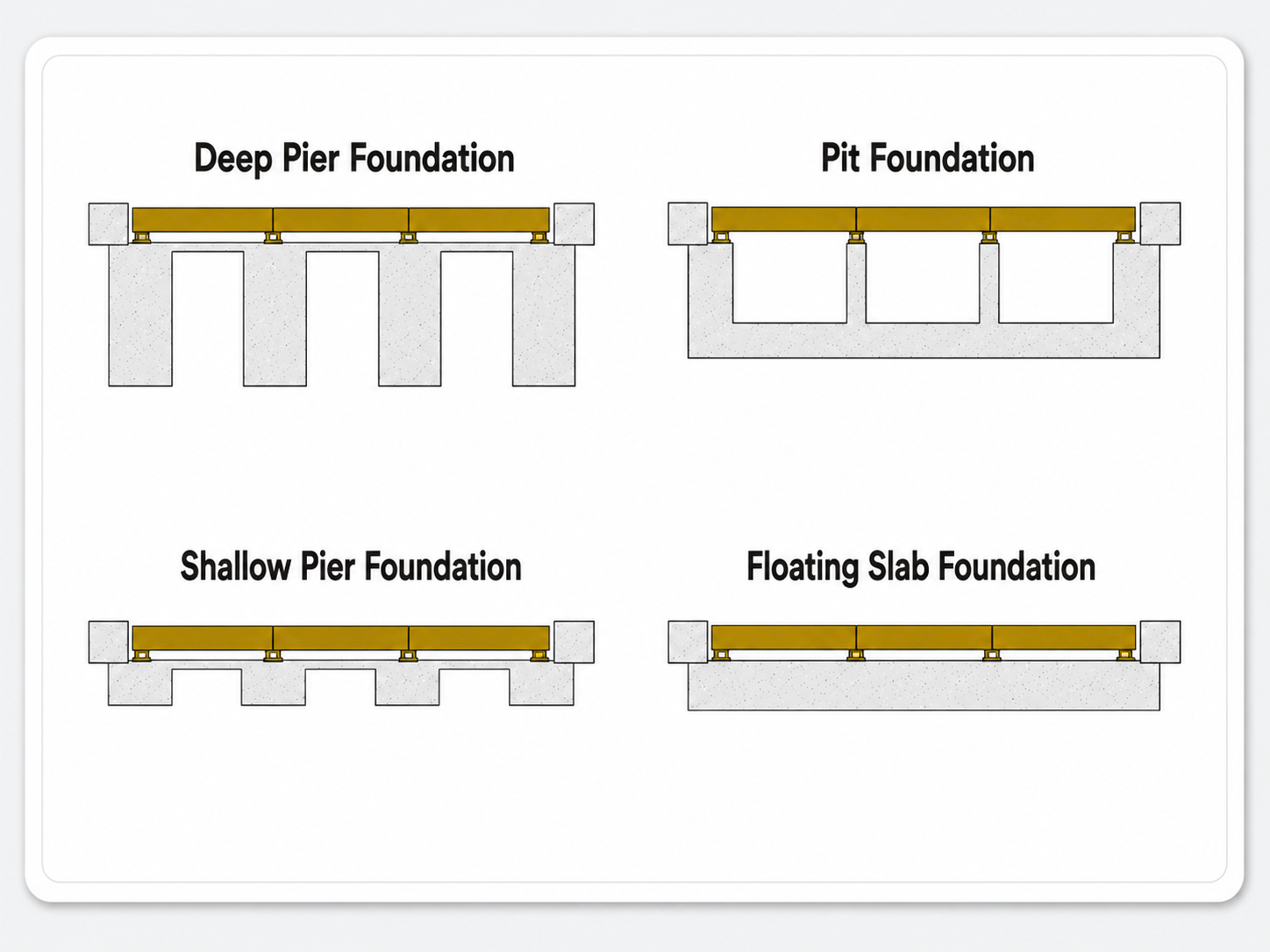
| Foundation Type | Best For | Key Considerations |
|---|---|---|
| Deep Pier Foundation | Challenging soil conditions and heavy-capacity applications | Greater structural support; may extend below frost depth |
| Shallow Pier Foundation | Stable sites with lower excavation requirements | Supports efficient installation with reduced site disruption |
| Floating Slab Foundation | Sites with consistent soil conditions and surface access needs | Simplified construction with dependable support across a broad load area |
| Pit Foundation | Space-constrained sites and flush traffic-flow requirements | Requires drainage planning, service access, and additional site coordination |
The appropriate foundation type depends on soil conditions, scale capacity, frost depth, site layout, drainage requirements, traffic flow, and long-term service needs.
Site Planning Considerations
Foundation planning should account for drainage, traffic flow, access, installation coordination, and the way the scale will operate within the broader facility.
Drainage & Water Management
Coordinate grading, runoff control, pit drainage, weather exposure, and service access.Traffic Flow & Site Layout
Plan approach lanes, turning space, operator visibility, maintenance access, and future expansion.Construction Coordination
Align foundation layout, concrete timing, contractor communication, utilities, and installation readiness.Coordinated Foundation & Installation Support
A well-planned foundation helps simplify installation and protect long-term scale performance. Precision Scale & Controls works with customers, contractors, engineers, and project teams to align foundation requirements with the selected equipment, site conditions, and operating workflow.